If you have spent any time recently reading about workplace inclusion, education, or mental health in the UK, you have almost certainly encountered the terms “neurodiversity”, “neurodivergent”, and “neurotypical”.
Over the last few years, these words have moved from niche academic circles and advocacy groups into mainstream conversation. You will now see them used by NHS trusts, local authorities, human resources departments, and across social media.
However, because these terms have entered the mainstream so quickly, they are frequently misunderstood, mixed up, or used incorrectly. For example, people often describe an individual as “neurodiverse”, which is grammatically impossible, or they assume “neurodivergent” is just a new, polite word for autism, which is only a fraction of the truth.
Understanding these terms is not just an exercise in learning new vocabulary. It is about shifting how we view human brains, intelligence, and behaviour. Whether you are an employer aiming to support your team, a parent navigating the UK’s Special Educational Needs and Disabilities (SEND) system, or someone exploring your own identity, this guide will break down exactly what these words mean, where they came from, and how to use them correctly.
What is Neurodiversity?
To understand any of the related terms, you first have to understand the root concept: neurodiversity.
The word was coined in the late 1990s by Judy Singer, an Australian sociologist who is herself autistic. Singer recognised that society readily accepts the concept of biodiversity—the idea that a healthy ecosystem requires a vast, complex variety of different plants and animals to function properly. She applied this exact same logic to human brains.
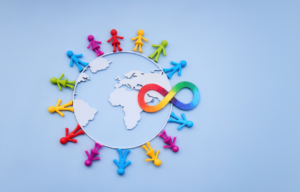
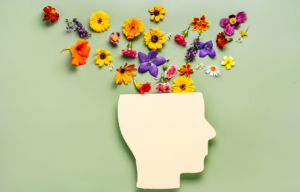
Neurodiversity is the biological reality that there is infinite natural variation in how human brains function, process information, learn, and behave. There is no single “right” or “wrong” way for a brain to work, just as there is no single “right” flower in a garden.
It is crucial to understand that neurodiversity includes everyone. Every single person on the planet is part of human neurodiversity.
How to use it: You use the word neurodiversity to describe a group of people. For instance, a classroom filled with children who all learn in completely different ways is a neurodiverse classroom. A workplace that employs people with a wide variety of cognitive profiles is a neurodiverse workplace. You cannot use it to describe one single person.
What Does Neurotypical Mean?
If neurodiversity covers all human brains, “neurotypical” describes the majority.
A neurotypical person is someone whose brain functions, learns, and processes information in the way that society expects and considers “standard”. Because neurotypical people make up the majority of the population, the world is fundamentally built for them.
In the UK, our entire societal infrastructure assumes a neurotypical baseline. The standard 9-to-5 working day, open-plan offices, bright fluorescent lighting in supermarkets, and the way our GCSEs and A-Levels rely heavily on written memory tests are all systems designed by and for neurotypical brains.
For a neurotypical person, navigating these systems does not require conscious translation. They might find work tiring or exams stressful, but the environment itself is not inherently hostile to their neurological makeup. The concept of being neurotypical is not a judgment or a criticism; it simply means your brain aligns with the societal default.
What Does Neurodivergent Mean?
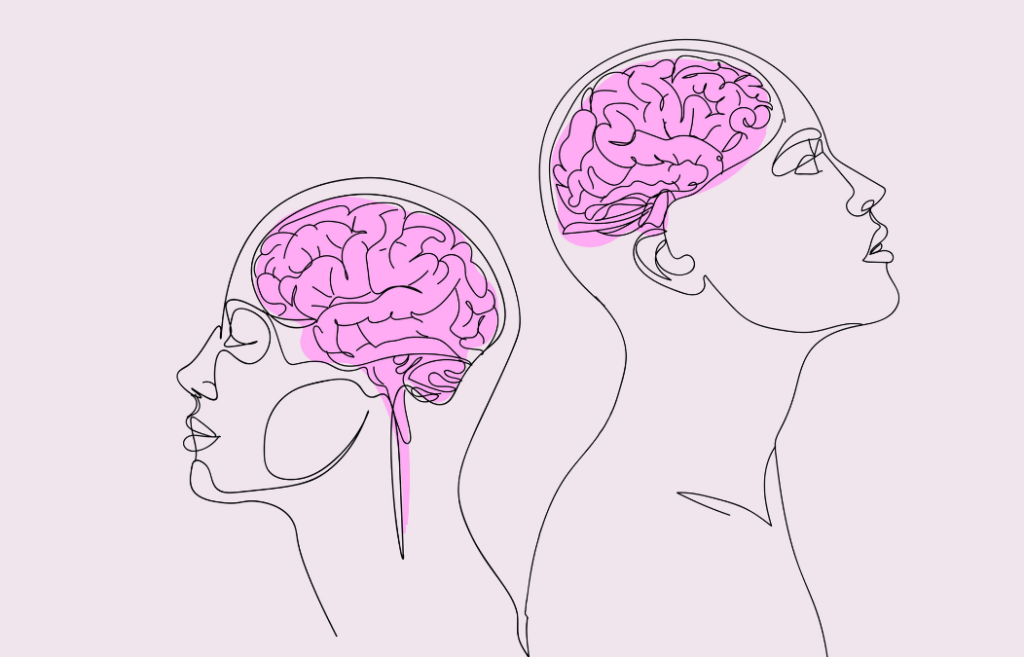
The term neurodivergent was coined by neurodiversity activist Kassiane Asasumasu. It describes an individual whose brain functions, learns, and behaves differently from what is considered typical. Their brain diverges from the dominant societal standard.
Neurodivergent is not a medical diagnosis. You cannot go to a GP and be diagnosed with “neurodivergence”. Instead, it is a social and political umbrella term that covers a wide range of specific neurological differences and medical diagnoses.
When someone says they are neurodivergent, they might be referring to one condition, or they might have multiple co-occurring conditions. Because neurodivergent brains develop differently, it is incredibly common for an individual to have more than one diagnosis under the umbrella (for example, someone who is both autistic and has ADHD).
What Conditions Fall Under the Neurodivergent Umbrella?
The neurodivergent umbrella is broad and continually evolving as our understanding of neurology improves. Generally, these differences fall into a few key categories.
1. Autism Spectrum Autism changes how a person perceives the world and interacts with others. Autistic individuals often have highly focused interests, communicate differently (often preferring direct, literal information), and may experience sensory input (like sound, light, or texture) much more intensely or less intensely than neurotypical people.
2. ADHD (Attention Deficit Hyperactivity Disorder) ADHD affects executive functioning, impulse control, and how the brain manages attention. People with ADHD may struggle with traditional focus and organisation, but they can also experience “hyper-focus”—a state of intense concentration on a subject of interest. It is frequently split into primarily inattentive, primarily hyperactive, or combined profiles.
3. Specific Learning Difficulties (SpLDs) This is a term heavily used in UK education and workplace assessments. It covers neurodivergent conditions that affect specific aspects of learning, despite the individual having standard or high overall cognitive ability. This includes:
- Dyslexia: Affecting reading, spelling, and working memory. Dyslexic individuals often excel in lateral thinking and spatial reasoning.
- Dyspraxia (Developmental Coordination Disorder): Affecting physical coordination, spatial awareness, and sometimes speech articulation.
- Dyscalculia: Affecting the ability to understand numbers, mathematics, and concepts like time and money.
- Dysgraphia: Affecting the physical act of writing and fine motor skills.
4. Tourette’s Syndrome and Tic Disorders Neurological conditions characterised by tics—involuntary, rapid, and sudden movements or vocal sounds that occur repeatedly.
5. Acquired Neurodivergence While autism, ADHD, and SpLDs are developmental (meaning people are born with them), many major UK charities, including The Brain Charity, recognise that neurodivergence can also be acquired later in life. Conditions that fundamentally alter how the brain processes information—such as a Traumatic Brain Injury (TBI), dementia, or the neurological impacts of multiple sclerosis—can also place someone under the neurodivergent umbrella.
The Social Model of Disability
To truly grasp the importance of these terms in the UK, you have to look at them through the lens of the Social Model of Disability.
Historically, society used the Medical Model. This model views neurodivergence as a set of deficits, disorders, or diseases that need to be cured, fixed, or hidden. It places the “problem” entirely inside the individual.
The Social Model—which is widely embraced by the UK neurodivergent community and underpins the spirit of the Equality Act 2010—flips this perspective. The Social Model argues that people are not disabled by their neurodivergence itself, but by a society that refuses to accommodate them.
For example, an autistic employee might not be disabled by their autism, but they are disabled by an employer who insists on placing them in a loud, brightly lit open-plan office and refuses to let them wear noise-cancelling headphones. The barrier is the environment, not the brain. The neurodiversity movement relies heavily on the Social Model to advocate for workplace adjustments, fairer educational frameworks, and societal acceptance.
Getting the Language Right
Language shapes reality. Using these terms correctly shows respect and a genuine willingness to understand the neurodivergent experience. Here is a quick guide to common grammatical pitfalls.
Incorrect: “My colleague is neurodiverse.” Correct: “My colleague is neurodivergent.” Why? Because one person cannot be diverse. Diversity requires a group.
Incorrect: “We are hiring neurodiverse candidates.” Correct: “We are hiring neurodivergent candidates to build a neurodiverse team.” Why? You are hiring individuals whose brains diverge from the typical (neurodivergent) in order to create a team with many different brain types (neurodiverse).
Identity-First vs. Person-First Language When talking about specific conditions, you will encounter two types of language. Person-first language puts the person before the condition (e.g., “A person with autism”). Identity-first language puts the condition first (e.g., “An autistic person”).
While you should always respect an individual’s personal preference, it is worth noting that the vast majority of the UK autistic community prefers identity-first language. They view autism not as an accessory they carry around, but as the fundamental lens through which they experience the entire world. Conversely, people with ADHD often say “I have ADHD” rather than “I am ADHD”. When in doubt, mirror the language the individual uses to describe themselves.
Why This Matters
Moving away from the language of “deficits” and “disorders” towards the language of neurodiversity allows us to see the complete picture of human capability. Neurodivergent brains are responsible for some of the greatest scientific breakthroughs, artistic achievements, and technological advancements in human history.
When we stop expecting neurodivergent people to act neurotypical, we stop forcing them to mask their true selves. By understanding the definitions of neurodiversity, neurotypical, and neurodivergent, we take the first practical step toward building a UK society—from our schools to our workplaces—that genuinely supports all kinds of minds.