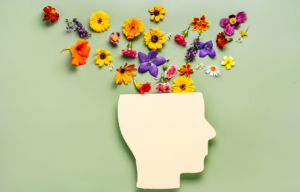

It is a question that frequently appears in news articles, social media and internet forums, often typed by parents seeking answers or neurodivergent adults trying to understand their own minds: If neuroplasticity is real, does that mean neurodivergent people can change?
It is a perfectly logical question to ask. For years, popular science documentaries, wellness podcasts, and self-help books have championed the concept of neuroplasticity. We are constantly told that the human brain is like clay, capable of rewiring itself, healing from trauma, and forging new pathways. If the brain can change itself, the logic goes, then surely a person with autism, ADHD, dyspraxia, or dyslexia can rewire their brain to become neurotypical.
The short answer is no. But the long answer is fascinating, complex, and vital for understanding how we support neurodivergent people in the UK today.
To answer this question with the compassion and accuracy it deserves, we need to untangle what neuroplasticity actually is, how the neurodivergent brain is built, and the crucial difference between learning a new skill and changing who you fundamentally are.
What is Neuroplasticity?
To begin, we must define what neuroplasticity means outside of the wellness industry marketing.
Neuroplasticity is the brain’s remarkable ability to reorganise itself by forming new neural connections throughout life. It is the mechanism that allows a stroke survivor in an NHS rehabilitation ward to relearn how to walk or speak. It is the process that happens when you learn to play the piano, pick up a new language, or memorise a new route to work. When you practice a skill, the neural pathways associated with that skill become stronger and more efficient.
Because of neuroplasticity, the brain is not a static, unchangeable lump of grey matter. It is dynamic and adaptable. However, adaptability has its limits. Neuroplasticity allows you to remodel the rooms inside your house, but it does not allow you to tear down the entire foundation and build a completely different building.
The Architecture of the Neurodivergent Brain
This brings us to neurodivergence. Conditions such as autism, ADHD, dyspraxia, and dyslexia are not bad habits. They are not psychological states caused by a lack of effort, and they are not software glitches.
They are neurodevelopmental conditions. This means that the fundamental, structural wiring of the brain developed differently from before the person was even born. Modern neurological scans show us that neurodivergent brains have different volumes in certain areas, different levels of neurotransmitter activity, and different patterns of connectivity between the hemispheres of the brain.
An autistic person’s brain, for example, typically has a higher density of local neural connections and a lower density of long-range connections. This is the structural foundation of who they are. It explains why they might have an incredible ability to focus on specific details, but struggle to process overwhelming sensory environments like a busy London underground station or a brightly lit supermarket.
Neuroplasticity cannot undo this foundational architecture. You cannot practice away a different nervous system. An autistic person will always be autistic. A person with ADHD will always have an ADHD nervous system.
The Illusion of Change: Masking
If neurodivergent people cannot fundamentally change their neurotype, why do some people seem to grow out of their traits or appear less neurodivergent as they get older?
This is where the conversation requires deep empathy. When an autistic or ADHD person appears to have changed to fit into neurotypical society, they are usually engaging in a survival mechanism called masking.
Because neuroplasticity allows us to learn, a neurodivergent child quickly learns that acting in their natural way often leads to social rejection, bullying, or discipline at school. Using their neuroplasticity, their brain learns to mimic neurotypical behaviour to stay safe. They learn to force eye contact even when it causes physical discomfort. They learn to suppress their natural need to fidget or stim. They learn to script their conversations in advance so they do not say the wrong thing.
To the outside observer, it looks like the person has changed. It looks like a success story. But internally, masking takes an astronomical toll on the nervous system. The brain is working twice as hard to run a neurotypical simulation on a neurodivergent operating system. In the UK, extensive research has shown that years of heavy masking is the leading cause of autistic burnout, severe anxiety, and depression in adulthood.
They have not changed who they are; they have just learned how to hide it at a massive cost to their mental and physical health.
How Neuroplasticity Actually Helps Neurodivergent People
Does this mean neurodivergent people are stuck, unable to grow or adapt? Absolutely not. This is where neuroplasticity becomes a beautiful, empowering tool rather than a weapon of conformity.
Neurodivergent people use neuroplasticity every single day to learn, adapt, and build lives that work for them. Instead of trying to use neuroplasticity to become neurotypical, it should be used to support the neurodivergent brain to thrive.
For someone with ADHD, neuroplasticity is what allows them to build new habits and executive function systems. Through coaching, mentoring, or cognitive behavioural therapy, they can forge new neural pathways that help them manage their time blindness or break massive tasks down into manageable steps. The ADHD is still there, but the brain has learned a new way to cope with the challenges it brings.
For an autistic person, neuroplasticity is what allows them to learn emotional regulation techniques. If they are prone to sensory meltdowns, they can learn to identify the early physical signs of overwhelm in their body and forge new pathways that tell them to seek out a quiet, dark room before the meltdown occurs.
Neuroplasticity is also how neurodivergent people learn to advocate for themselves, communicate their boundaries, and develop their unique strengths, whether that is lateral thinking, deep empathy, or intense creative focus.
The Danger of the “Fix It” Narrative
It is vital that we reframe how we talk about change in the neurodiversity space. Historically, many therapeutic interventions aimed at neurodivergent children were rooted in the idea of fixing them. The goal was to make them indistinguishable from their peers, heavily relying on the idea that the brain could be trained out of its neurodivergence through relentless repetition and behavioural conditioning.
The UK neurodiversity movement, led by neurodivergent advocates, has fought hard against this narrative. Pushing a child to change their fundamental nature sends a devastating message: that the way they were born is wrong and needs to be cured.
When we accept that neurodivergence is a permanent, structural difference, the goal of support completely shifts. The goal is no longer to change the person to fit the environment. The goal is to change the environment to fit the person, while giving the person the skills and tools they need to navigate the world safely and happily.
Acceptance Over Modification
To return to the original question: If neuroplasticity exists, can neurodivergent people change?
Yes, neurodivergent people can change in the exact same ways neurotypical people can. They can learn new languages, develop new emotional coping mechanisms, build resilience, form new relationships, and change their habits. Their brains are incredibly adaptable.
But they cannot use neuroplasticity to erase their neurodivergence. And more importantly, they should never be expected to.
A thriving, healthy society requires many different types of minds. The answer is not to ask neurodivergent people to rewire themselves to fit a standard mould. The answer is to understand their unique neurology, celebrate their strengths, and provide the reasonable adjustments they need to flourish exactly as they are.