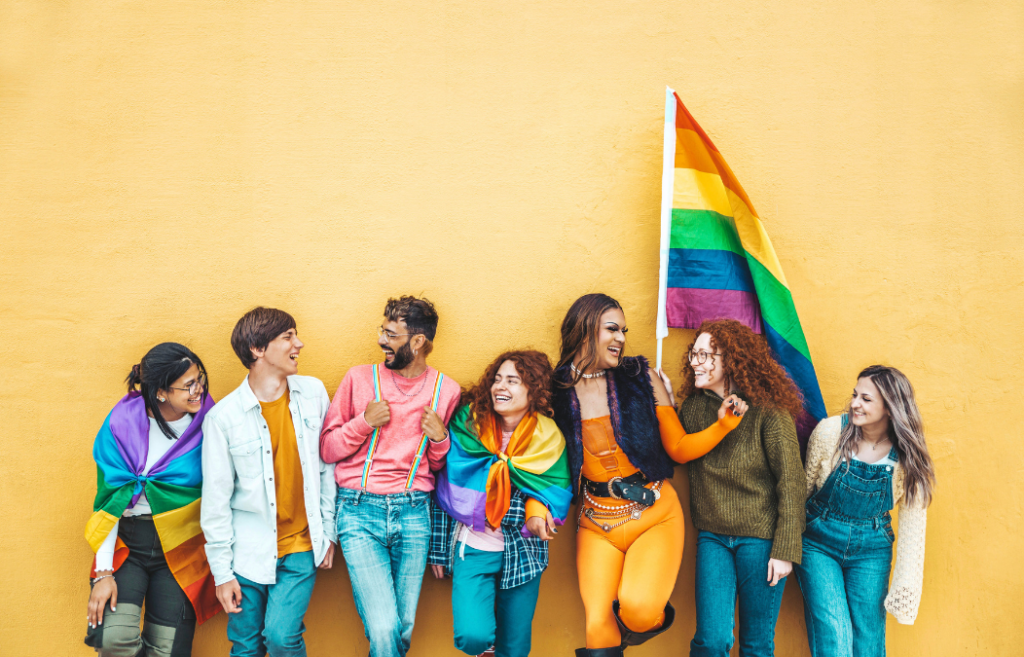
If you are navigating the world as both a neurodivergent person and a member of the LGBTQ plus community, you might have noticed a recurring, highly visible pattern. Whether it is in local UK support groups, university societies, online forums, or even just among your own friend circles, there seems to be a significant and undeniable overlap.
You are not imagining things, and it is not a coincidence. Over the last few years, a growing body of clinical research and sociological study has confirmed what many within these communities have known through lived experience for a long time: there is a profound, measurable intersection between neurodivergence and identifying as LGBTQ plus.
For many people, discovering this overlap is an incredibly validating experience. It provides a much-needed sense of shared community and helps to explain the complex, multifaceted way they experience the world. However, it also raises a frequent and entirely natural question: why does this intersection exist?
In this article, we will explore the connection between neurodiversity and LGBTQ plus identities, looking at current research, the concept of social constructs, and the unique challenges faced by those living at this intersection in the UK today.
Understanding the Statistics
Before exploring the why, it is helpful to look at the what. Several major studies conducted by leading universities in the UK and internationally have highlighted this overlap.
For example, research indicates that autistic individuals are significantly more likely to identify as transgender, non-binary, or gender diverse compared to the neurotypical population. Similarly, studies looking at sexual orientation have consistently found that neurodivergent individuals, including those with ADHD or autism, are more likely to identify as bisexual, asexual, pansexual, or gay than their neurotypical peers.
These statistics are not just abstract numbers on a page; they represent the lived realities of thousands of people across the country. But it is absolutely vital to approach these statistics with the right mindset. Being neurodivergent does not cause someone to be LGBTQ plus, and being LGBTQ plus does not cause neurodivergence. One is not a symptom of the other. Instead, the two simply coexist at a much higher rate than society previously understood.
Why Does This Overlap Exist?
The short answer is that there is no single, definitive scientific reason. Human identity is incredibly complex, and there is no one gene or single environmental factor that explains this intersection. However, researchers, sociologists, and community advocates have put forward several compelling, compassionate theories that help us understand the connection.
The Social Construct Theory
One of the most widely accepted and validating theories relates to how neurodivergent people view societal norms and expectations.
The neurotypical world is built on a vast array of unwritten social rules. These rules dictate everything from how we make eye contact to how we are expected to dress, behave, and form relationships based on the gender we were assigned at birth.
For many neurodivergent people, particularly those on the autism spectrum, these unwritten social rules feel illogical, restrictive, or simply unnecessary. Because a neurodivergent brain is already wired to question or naturally bypass standard societal expectations, it stands to reason that they might also be more inclined to question the societal constructs of gender and sexuality.
If you already feel outside the box of neurotypical expectations, you may feel significantly less pressure to conform to the box of heteronormative expectations. This does not mean neurodivergent people are confused about their identity; rather, they may simply be freer from the societal pressures that keep others in the closet. They are more likely to define themselves on their own terms, rather than adopting the labels society handed them.
The Enhanced Introspection and Unmasking Theory
Another theory focuses on introspection and the journey of unmasking. Navigating a world that is not built for your brain often requires a high degree of self-analysis.
Many neurodivergent people spend a significant amount of time trying to understand how their mind works, why they react to certain stimuli, and how they relate to others. This deep, lifelong habit of internal reflection may lead to an earlier or more profound understanding of their own gender identity and sexual orientation. When you spend your life analysing your internal world, you are perhaps more likely to uncover and accept your true authentic self, rather than ignoring it to fit in.
Furthermore, when an adult receives a late neurodivergent diagnosis, they often go through a process called unmasking, where they stop hiding their neurodivergent traits. It is very common that as a person sheds their neurotypical mask, they also shed their heteronormative mask, allowing their full identity to emerge at the same time.
The Importance of Double Empathy
When discussing this intersection, we must also consider how these communities find one another. The Double Empathy Problem, a theory developed by autistic academic Dr Damian Milton, suggests that communication is easiest and most effective between people who share the same neurotype.
It is highly likely that neurodivergent LGBTQ plus individuals naturally gravitate towards one another because they share a fundamental understanding of what it means to be marginalised by mainstream society. They find safety, radical acceptance, and a shared language within these intersecting communities. This natural gravitation makes the overlap feel even more pronounced and visible within community spaces.
Navigating the Challenges in the UK
While finding community at this intersection can be beautiful, affirming, and joyful, it is crucial to acknowledge the unique challenges these individuals face, often referred to as double discrimination.
Accessing healthcare in the UK is currently a significant struggle for both communities. Waiting lists for adult ADHD and autism assessments on the NHS are notoriously long, often stretching into years depending on the local trust. Simultaneously, waiting times for NHS Gender Identity Clinics are in a state of national crisis, with some patients waiting over five years for a first appointment. When an individual needs support from both systems, the delays can be devastating to their mental health.
There is also the persistent, harmful issue of diagnostic overshadowing. This occurs when a medical professional attributes all of a person’s experiences or health concerns to their neurodivergence, while completely dismissing their gender identity or sexuality. For example, a transgender autistic young person might be told by a clinician that their gender dysphoria is just a hyperfixation related to their autism. This is an incredibly harmful practice that invalidates the person’s lived experience and serves only to delay vital, life-saving gender-affirming care.
Finding Support and Moving Forward
If you are existing at the intersection of neurodivergence and the LGBTQ plus community, the most important thing to know is that your identity is completely valid. Your neurodivergence does not make your sexuality or gender identity any less real, and vice versa. You are exactly who you are supposed to be.
In the UK, several brilliant organisations are working specifically at this intersection. Charities like Sparkle, which supports the transgender community, and various local neurodiversity hubs are increasingly running joint initiatives, sensory-friendly Pride events, and specific social groups. Online spaces can also provide a vital lifeline, offering forums where you can speak to others who understand exactly what it is like to navigate the world with a similar brain and heart.
Society still has a very long way to go in understanding this intersection. We need more comprehensive, affirming training for NHS clinicians, and we need to ensure that local LGBTQ plus spaces, from bars to community centres, are genuinely sensory-friendly and accessible to neurodivergent people.
But the conversation is finally changing. By continuing to talk about this overlap with compassion, accuracy, and an open mind, we can move towards a future where no one feels they have to hide one part of themselves just to have the other part accepted.