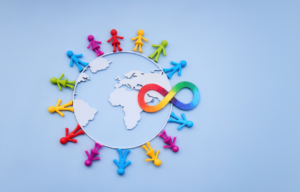

There is a question that is increasingly being typed into search engines by parents, professionals, and individuals alike: how does neurodiversity impact mental health?
To answer this accurately, we first need to clear up a very common misconception. Neurodivergent conditions, such as autism, ADHD, dyspraxia, and dyslexia, are not mental health conditions. They are neurodevelopmental differences. They describe the physical way a brain is wired to process information, learn, and experience the world.
However, while neurodivergence and mental health are two entirely separate things, they are deeply intertwined. Statistical evidence across the UK paints a very clear and concerning picture. Neurodivergent individuals are significantly more likely to experience mental health struggles, including severe anxiety, clinical depression, and chronic burnout, compared to their neurotypical peers.
To support neurodivergent people effectively, we have to look past the statistics and understand the root cause. Why does this overlap exist? The answer rarely lies in the neurodivergence itself. Instead, the poor mental health experienced by so many neurodivergent people is largely caused by the friction of living in a society that is not built for them.
This article explores the daily realities that impact the mental health of neurodivergent people in the UK, from the exhausting toll of masking to the barriers within the healthcare system, and looks at how we can foster genuinely supportive environments.
The Minority Stress Model
When exploring the mental health of neurodivergent individuals, psychologists often point to the Minority Stress Model. This concept explains that individuals who belong to marginalised groups experience chronically high levels of stress purely because of their minority status.
For a neurodivergent person, this stress is a daily, compounding reality. From a very young age, they receive constant messaging that their natural way of moving, speaking, and interacting with the world is incorrect. They might be told they are too loud, too sensitive, too disorganised, or too quiet.
When you spend your entire life being corrected or misunderstood by the majority, it severely erodes your self-esteem. This chronic societal friction puts the nervous system into a state of persistent hyperarousal, laying the groundwork for clinical anxiety and depression.
The Exhausting Reality of Masking
One of the most significant drivers of poor mental health within the neurodivergent community is masking.
Masking, sometimes called camouflaging, is the conscious or subconscious suppression of neurodivergent traits in order to blend in with neurotypical society. It is a survival mechanism. An autistic person might force themselves to make painful eye contact during a job interview to avoid being seen as rude. Someone with ADHD might sit rigidly still during a three-hour meeting, suppressing their overwhelming physical need to move, just to appear professional.
To the outside world, a masked neurodivergent person looks like they are coping perfectly well. But internally, the cognitive toll is astronomical. The brain is constantly monitoring the environment, analysing social cues, and manually overriding its own natural impulses.
Years of heavy masking leads to a very specific and severe form of exhaustion known as autistic burnout. Unlike standard workplace burnout, which can often be resolved with a holiday, neurodivergent burnout is a total collapse of the central nervous system. It can cause a regression in skills, severe depression, and months of recovery. The mental health impact of constantly pretending to be someone else cannot be overstated.
Sensory Overload and the Fight or Flight Response
The physical environment is another major factor that links neurodivergence to poor mental health. Many neurodivergent people process sensory information differently.
A neurotypical brain can automatically filter out background noise, like the hum of a refrigerator or the chatter in an open-plan office. A neurodivergent brain might process all of that information at the exact same volume simultaneously.
When the brain receives too much sensory input, it becomes overloaded. This triggers the amygdala, the part of the brain responsible for the fight or flight response. This means that a trip to a brightly lit, noisy supermarket can cause the same physiological panic response as a genuine physical threat. Living in a state of constant sensory assault means the body is continually flooded with stress hormones like cortisol and adrenaline, making chronic anxiety an almost inevitable outcome.
Executive Dysfunction and Self-Worth
Conditions like ADHD and dyspraxia heavily impact a cognitive process called executive function. This is the brain’s management system, responsible for working memory, time management, and task initiation.
When a person struggles with executive dysfunction, standard daily tasks become monumental hurdles. They might desperately want to pay a bill, clean their house, or start an essay, but find themselves completely neurologically paralysed.
Because society equates productivity and organisation with moral goodness and intelligence, struggling with these tasks carries a heavy stigma. Neurodivergent people are frequently labelled as lazy, careless, or unmotivated. Internalising these labels destroys a person’s self-worth. They develop a deep sense of shame about their inability to perform basic tasks, which directly feeds into depressive episodes and social withdrawal.
Navigating the UK Healthcare System
When neurodivergent people do reach out for mental health support in the UK, they often face a healthcare system that does not fully understand their neurology.
One of the most dangerous phenomena in this space is diagnostic overshadowing. This happens when a doctor or therapist attributes all of a person’s valid mental health concerns directly to their neurodivergence, dismissing the need for treatment. For instance, an autistic teenager presenting with severe clinical anxiety might be told that worrying is just part of their autism, and therefore they are denied access to targeted mental health support through systems like CAMHS.
Conversely, neurodivergent traits are often misdiagnosed as personality disorders or mood disorders, leading to inappropriate and sometimes harmful psychiatric treatments. Standard therapeutic approaches, like traditional Cognitive Behavioural Therapy, are built for neurotypical brains and can often be ineffective or even gaslighting for neurodivergent individuals if not carefully adapted.
Furthermore, the waiting lists for adult neurodevelopmental assessments on the NHS can stretch for years. Living in a state of diagnostic limbo, knowing you need help but being unable to access it, exacerbates existing mental health crises.
Creating Supportive Environments
The link between neurodiversity and poor mental health is undeniable, but it is not inevitable. Because the mental health decline is primarily caused by environmental and societal factors, changing the environment can drastically improve outcomes.
In the workplace and in education, this means taking the legal duty of reasonable adjustments under the Equality Act 2010 very seriously. True support means offering flexibility. It means allowing an employee to work from home to avoid sensory exhaustion. It means removing the stigma around using fidget tools in meetings or wearing ear defenders in the classroom. It means judging a person by the quality of their work, not by how their brain operates.
Additionally, signposting individuals to the Access to Work scheme can provide them with crucial funding for neurodiversity-specialist coaching, helping them navigate a neurotypical world without burning out.
Moving Forward with Acceptance
If we want to improve the mental health of neurodivergent people, we have to stop trying to force square pegs into round holes.
The goal should never be to make a neurodivergent person appear less neurodivergent. The goal must be to build a society that makes room for different types of minds. When neurodivergent people are supported, accepted, and allowed to exist authentically without the crushing weight of masking, their mental health vastly improves. Acceptance is not just a nice concept; it is a vital, life-saving mental health intervention.